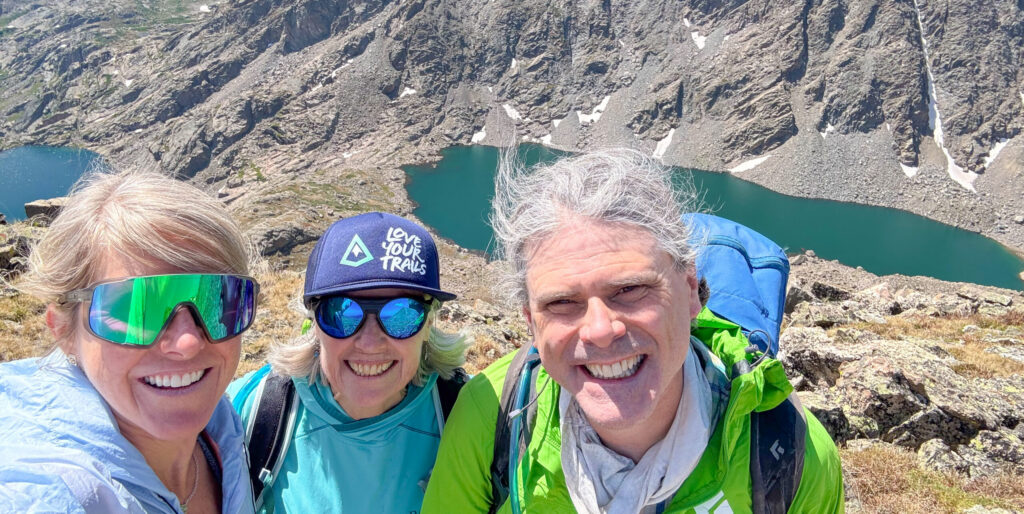
On a July morning at a Wilderness trailhead in the Vail Valley, the parking lot fills faster than most people expect. By 7 a.m. there are a handful of cars. By 9 the lot is full. By 10, vehicles stretch down the road in both directions. The people heading up the trail come from everywhere: local families who have hiked this area for years, visitors who found it on an app the night before, backpackers heading out on an overnight adventure, trail runners, and friends out for a quiet morning in the mountains. Some know the rules. Most are doing their best. And a few will leave the trail a little worse than they found it, not out of carelessness or disrespect, but simply because they just don’t know and nobody taught them otherwise.
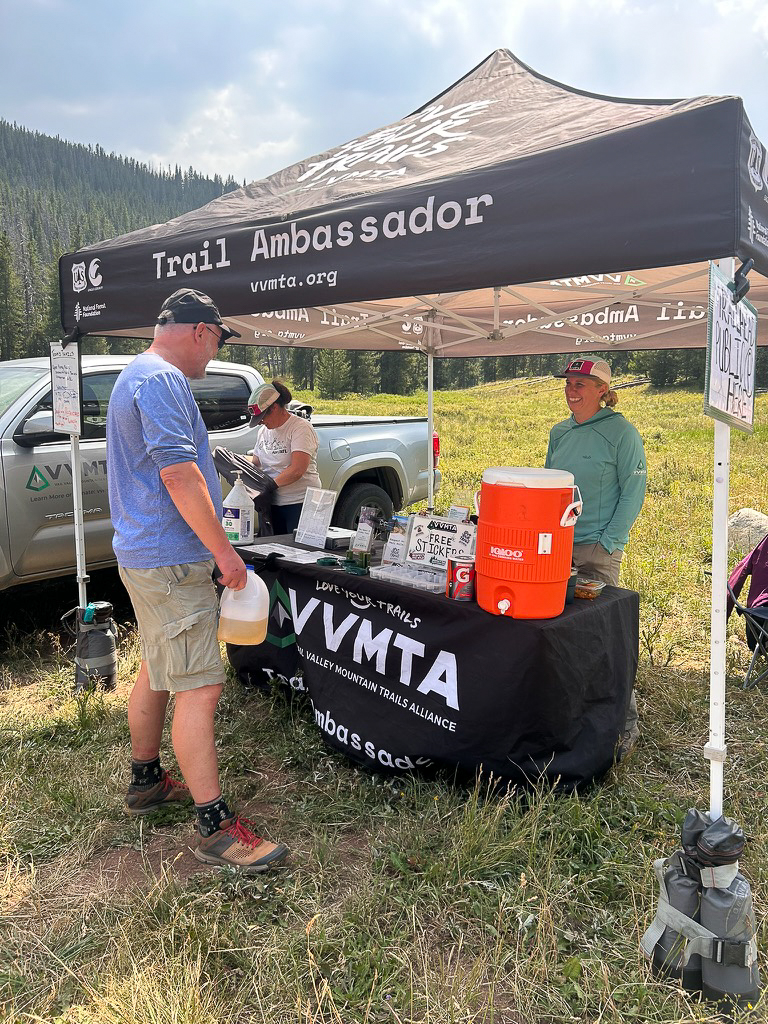
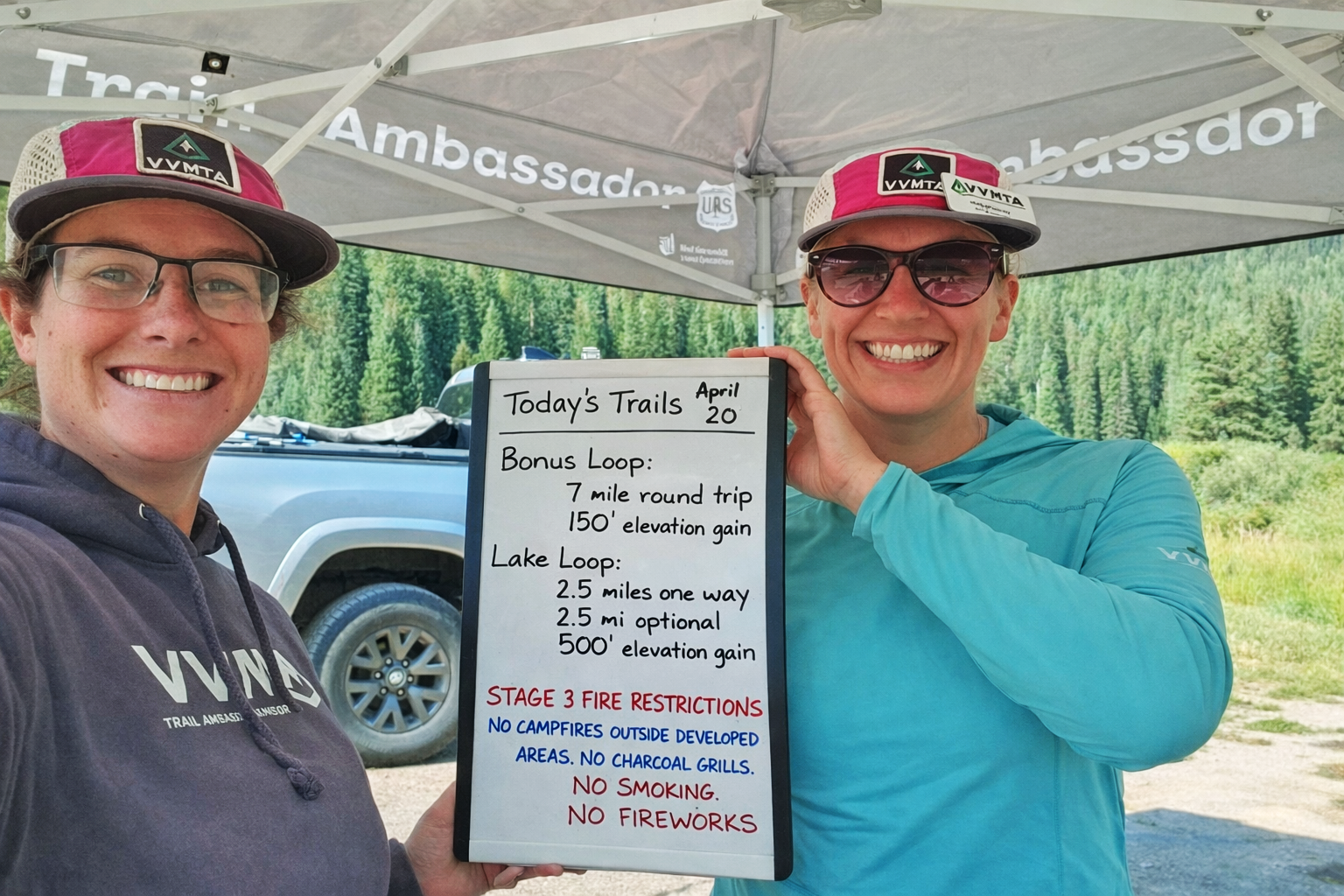
That is exactly the gap the VVMTA Trail Ambassador program is built to fill. Two full-time seasonal ambassadors spend the summers at Eagle County’s highest-use trailheads, many of which provide access to Wilderness areas. They are out there ready to answer questions, hand out wag bags and leashes, talk through fire restrictions, and have the kind of honest, friendly conversations that actually change behavior on trail. Here is what they find, what they are asking, and how you can help keep these trails worth coming back to.
Respect the Trail
Whether you are hiking, running, mountain biking, or riding horseback, the guidelines for sharing trail in Eagle County are the same for everyone. A few simple habits keep the experience safe and enjoyable for all users, especially on narrow singletrack where two groups can surprise each other around a corner. And the number one thing you can do out there? Smile, say hello, and wish someone a great hike or ride. We are all out here for the same reasons, and a little joy goes a long way on the trail.
Right of Way
Knowing who yields to whom makes a real difference on a busy trail. The order below applies across all non-motorized trails in Eagle County.
| If you are… | You yield to… |
|---|---|
| Mountain biking | Hikers, runners, and equestrians |
| Hiking or running | Horses and wheelchair users |
| Heading downhill | All users traveling uphill, regardless of trail use type |
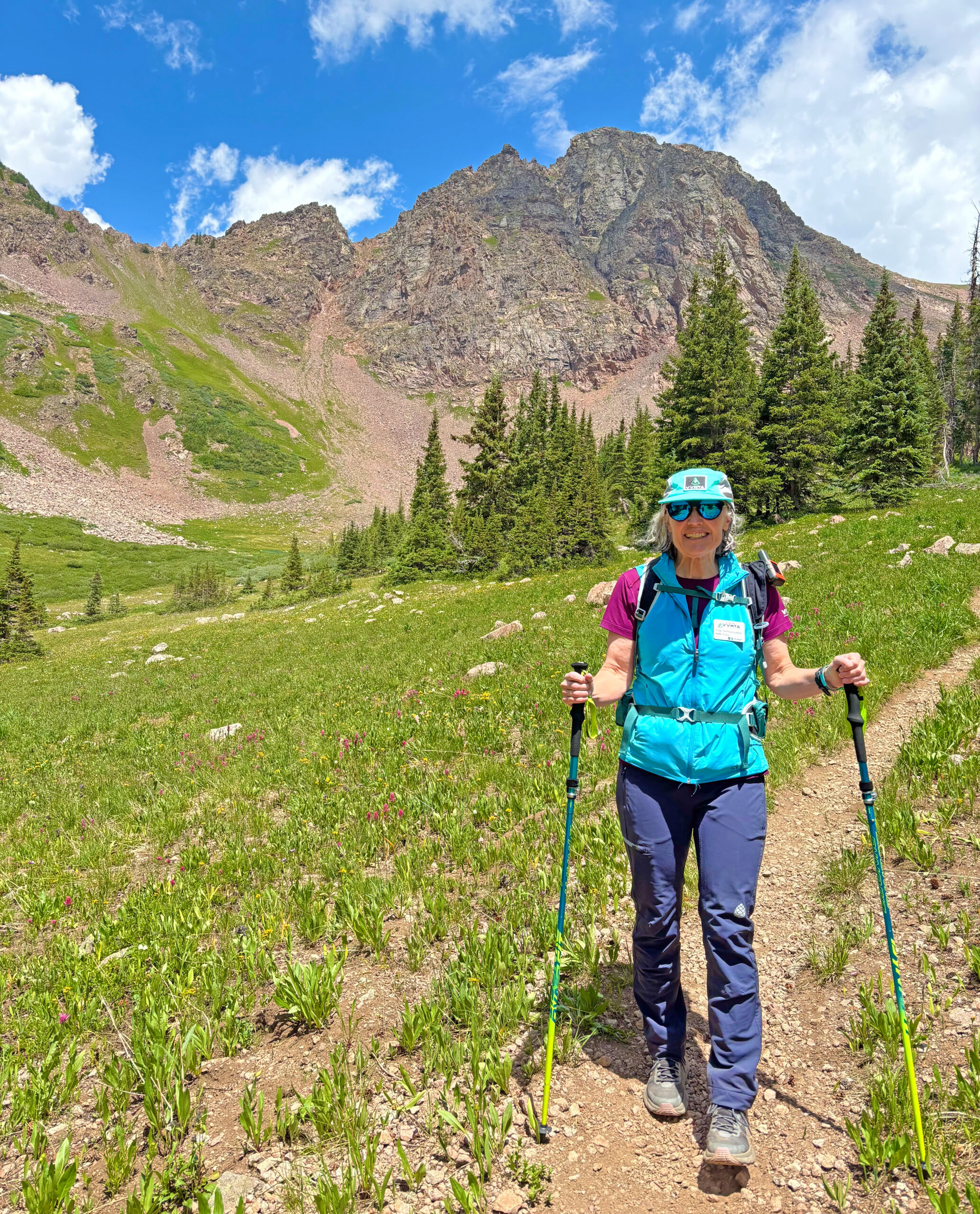
Beyond right of way, keep your music low enough to hear what is coming around the bend. Stay on the marked trail rather than cutting corners or creating new lines through the vegetation. And slowing down and being present goes a long way for everyone sharing the trail.
Dogs on Trail
Dogs are welcome on most Eagle County trails and they make the day better for everyone around them. A few things matter a lot out there:
- Keep dogs on a physical leash on all Wilderness trails and any trail with a posted leash requirement, including Gore Creek, Pitkin Creek, Bighorn, and more.
- Keep your dog on trail. This is easy to do if you keep your dog leashed.
- Pack out all dog waste. No, there is not a dog poop fairy that comes around and picks up the green poop bag you left on the trail.
- Dogs chasing wildlife, big or small, has a serious negative impact on their health and survival. Keeping your dog leashed goes a long way.
“All dog waste bags should be the most obnoxious color possible. Make them impossible to ignore.”
Trail Ambassador, Gore Creek, Summer 2025
Respect the Backcountry
The Eagles Nest and Holy Cross Wilderness areas are some of the most accessible and spectacular backcountry terrain in Colorado. We are very fortunate to have them in our backyard. They are also some of the most fragile. The decisions you make out there, from where you set up camp to how you handle fire, leave a mark that outlasts your trip by weeks or longer.
Fire Restrictions
Fire restrictions in Eagle County change throughout the season and can move quickly depending on conditions. Always check current restrictions at the Eagle County Emergency Management site before every backcountry trip. When in doubt, go without a fire. If conditions allow one, use an existing ring, never leave it unattended, and put it out with water until it is cool to the touch. If you do have a fire, be aware of where it is: are you under a tree or near vegetation that can easily catch fire? Is your fire out in the open where wind can spread hot embers?
Fires near alpine lakes scar fragile shorelines, pollute clean water, and leave damage that can last for years. At Beaver Lake last summer, ambassadors discovered an illegal campfire ring built directly beside the trail and lake. They dispersed the ring and cleaned up the area, as they do whenever they encounter illegal campfire rings. For specific fire and camping regulations in the Eagles Nest and Holy Cross Wilderness areas, visit the USFS White River National Forest pages for Eagles Nest Wilderness and Holy Cross Wilderness.
A quick heads up: campfires are completely forbidden above 11,000 feet in these Wilderness areas to protect high-alpine ecosystems, must be kept at least 100 feet away from creeks and lakes below that elevation, and are entirely banned at any elevation within the Missouri Lakes, Fancy Creek, and East Cross Creek watersheds.
Camping
At Sopris Lake, most tents were pitched at the water’s edge, well inside the 100-foot buffer that Wilderness regulations require. These are not isolated incidents. Camping too close to water damages fragile shorelines, contaminates water sources, and degrades the wilderness experience for everyone who comes after you. For a deeper look at what trash on trail really costs, the numbers tell the story.
| What We Are Seeing | What to Do Instead |
|---|---|
| Improvised fire rings or fires built too close to water and vegetation | Never build new fire rings; only use rings safely set back from water and trees and at proper elevations; extinguish with water until cool |
| Tents pitched directly at lakeshores or next to creeks | Camp at least 100 feet from all water; camping too close damages fragile shorelines and contaminates water sources that others drink from |
| Trash and food waste left on trail or at camp | Pack out everything you pack in, including food scraps, packaging, human waste, and all pet waste |
| Dogs off leash in Wilderness areas | Keep dogs on a physical leash in all Eagles Nest and Holy Cross Wilderness areas at all times |
| Human waste and toilet paper left in sensitive areas near water and trail | Pack out all human waste using a wag bag; treat it the same as you would pet waste |
What Goes In Must Come Out
Human waste is one of the fastest-growing issues in heavily used Wilderness areas. Shallow burials, wads of toilet paper, and waste left near water sources are not only unsightly but genuinely harmful to the ecosystem and to other trail users downstream. The solution is the same one we ask of you for your dog: carry it out. Wag bags work for humans too, and they are available at most Wilderness trailheads. Read our full guide on how to properly handle human waste in the backcountry before your next overnight trip.
“It was only the fifth day the trail had been open for the season. We had already picked up 30 pieces of trash.”
Trail Ambassador, Cross Creek, Summer 2025
Who Is Out There With You
The Trail Ambassador program has been putting people on the trail since 2018 to do exactly this work. This summer, two full-time seasonal staff will again cover the highest-use Wilderness trailheads in Eagle County every Thursday through Sunday from late June through September, logging 10-hour days to be out when the trails are busiest. They show up with trifold brochures, wag bags, leashes, and enough knowledge of local regulations to answer almost any question that comes up. For a closer look at what a full season of this work looks like, the stories from last year tell it well. The people doing this work are the reason it holds together.
The program is funded through the generous support of the Eagle County Lodging Tax Marketing Committee, the Forest Service, and the National Forest Foundation’s White River Ski Conservation Fund in partnership with Vail Resorts Epic Promise. Running it costs $95,000 annually. That covers staff, equipment, and every mile covered on patrol. To keep the program running through 2027 and beyond, continued community and donor support is essential. Every conversation that happens at a trailhead this summer is only possible because someone helped pay for it.
“Every trail user has the potential to be a powerful steward.”
Ernest Saeger, Executive Director, Vail Valley Mountain Trails Alliance | Vail Daily
Help Keep This Program Going
The trails in Eagle County belong to all of us, and so does the work of protecting them. If you have benefited from a helpful conversation at a trailhead, a cleaner trail at the end of a long season, or simply the knowledge that someone is out there paying attention, consider supporting the work that makes it possible. Donate to VVMTA to help fund the Trail Ambassador program into 2027. You can also explore the full Respect the Vail Valley campaign and the guidelines our ambassadors carry to every trailhead.
Frequently Asked Questions
What are the right-of-way rules for trail etiquette in Eagle County?
The standard order puts horses and wheelchair users first, followed by hikers and runners, with mountain bikers yielding to all non-motorized users on foot or horseback. When two users are going in opposite directions on a slope, the downhill user yields to the person heading uphill regardless of trail use type. A wave and a heads-up go a long way on a busy trail. You can find the full breakdown on our Respect the Vail Valley page, and our ambassadors are always happy to walk through it at the trailhead.
Are dogs required to be on leash in Wilderness areas in Eagle County?
Yes. Dogs are required to be on a physical leash in the Eagles Nest Wilderness and Holy Cross Wilderness areas, which include popular routes such as Gore Creek, Pitkin Creek, Bighorn, Mount of the Holy Cross, Missouri Lakes, and more. Off-leash dogs in Wilderness areas are one of the most common issues our ambassadors address every season. The requirement protects wildlife, other trail users, and your dog. Check the specific rules for each area at the USFS White River National Forest pages for Eagles Nest Wilderness and Holy Cross Wilderness, and check the VVMTA trail conditions page for current closures before you head out.
How do I check fire restrictions before heading into the backcountry?
Fire restrictions are updated in real time at the Eagle County Emergency Management fire restrictions page. Check before every backcountry trip rather than assuming last week’s status still applies. Stage 1 limits open flames to managed and designated campfire rings such as those in a USFS campground; Stage 2 bans them entirely, including camp stoves with open flames. When in doubt, go stoveless for the night. Our ambassadors covered fire restrictions as part of their 2025 summer recap.
Where can I find VVMTA Trail Ambassadors this summer?
Trail Ambassadors work high-use Wilderness area trailheads in Eagle County every Thursday through Sunday from late June through September. You are most likely to find them at Wilderness area trailheads in East Vail, Lake Charles, Missouri Lakes, and other heavily visited areas in the Eagles Nest and Holy Cross Wilderness. They carry the Respect the Vail Valley trifold covering trail etiquette, backcountry guidelines, and wildlife awareness. Read stories from the trail or learn more at vvmta.org/trailambassadors.