
By Ernest Saeger
Fire season in Eagle County is part of the deal. Those of us who live and play here know the rhythm: restrictions go up, plans shift, and when the smoke clears, we get back outside. What most people have not considered is that the trails we hike, run, and ride on could actually help protect this valley from wildfire.
VVMTA has been working with Eagle Valley Wildland, the multi-agency partnership dedicated to reducing wildfire risk across Eagle County, to understand exactly how trails fit into that picture. The concept driving that work is called fire hardened trails, and it starts with a simple question: what if the trail was the firebreak?
When a Trail Becomes a Firebreak
Every singletrack trail sits within a corridor of land, typically around 100 feet wide. By managing the vegetation in that corridor thoughtfully, that strip of ground becomes more than a path through the trees. It becomes a lane where surface fuels are reduced, ladder fuels are gone, and wildland firefighters have a route in with equipment when they need it most.
The fire hardened trail prescription looks like this in practice:
- Remove all trees and brush under five inches in diameter within the corridor
- Limb larger trees up to eight feet to eliminate the understory that carries a ground fire into the canopy
- Clear and haul out all deadfall through chipping, prescribed burning, or helicopter removal
- Use the resulting cleared lane as a fuel break and staging area for fire suppression
According to the Colorado State Forest Service, fuels treatments like these can reduce wildfire severity significantly compared to untreated forest stands. The U.S. Forest Service has also prioritized this kind of proactive forest management as a core strategy for protecting communities. The difference between a trail and a fire hardened trail is the difference between a path through the forest and a tool for protecting what surrounds it.
How VVMTA Is Putting This Into Practice
VVMTA has identified four distinct paths for bringing this approach to Eagle County. Each is at a different stage, and the organization has been deliberate about distinguishing between what is actively underway and what still requires more time, resources, and approvals. Here is where each stands.
| Path | What It Involves | Status | Communities Protected |
|---|---|---|---|
| Existing trails | Fire mitigation prescription layered onto annual clearing work; 100-foot corridor vegetation removal | Vision stage; not committed for 2026 | All Eagle County trail corridors |
| Active trail projects | Fire hardening built into Eagle Veil Trail extension and Water Tank Trail reroute in Homestead | In progress; pending land manager approvals | Eagle, Homestead, Arrowhead, Edwards |
| New trails on federal land | Fire hardening written into BLM and Forest Service trail reviews at the approval stage | Proposal with BLM in Eagle; public scoping expected soon | Eagle and surrounding communities |
| Trails and Stewardship Crew & Trail Ambassadors | Fire restriction signage, campsite patrol, fire ring installation, camper education | Active, underway in 2026 | All public lands in Eagle County |
Starting With the Trails That Already Exist
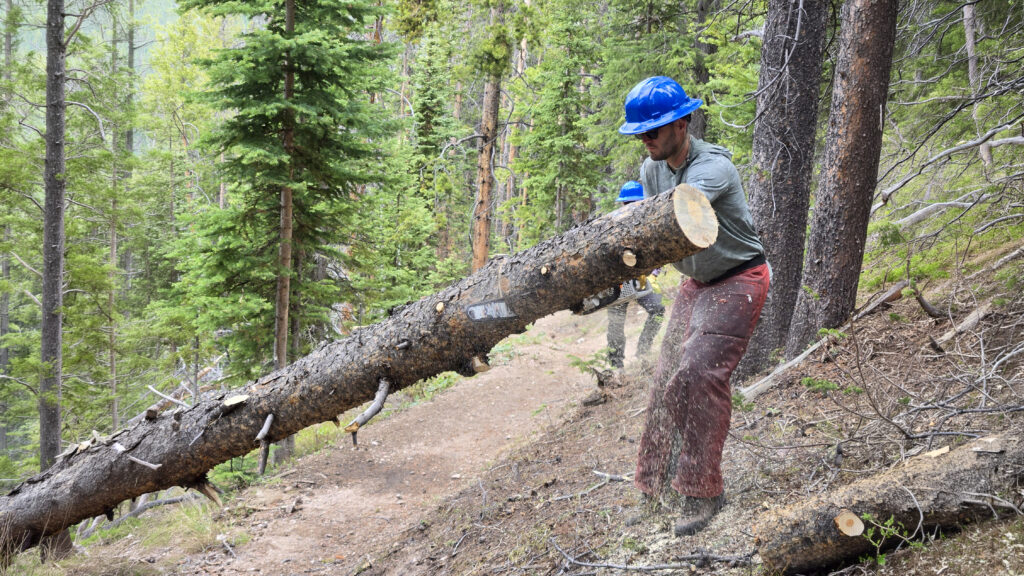
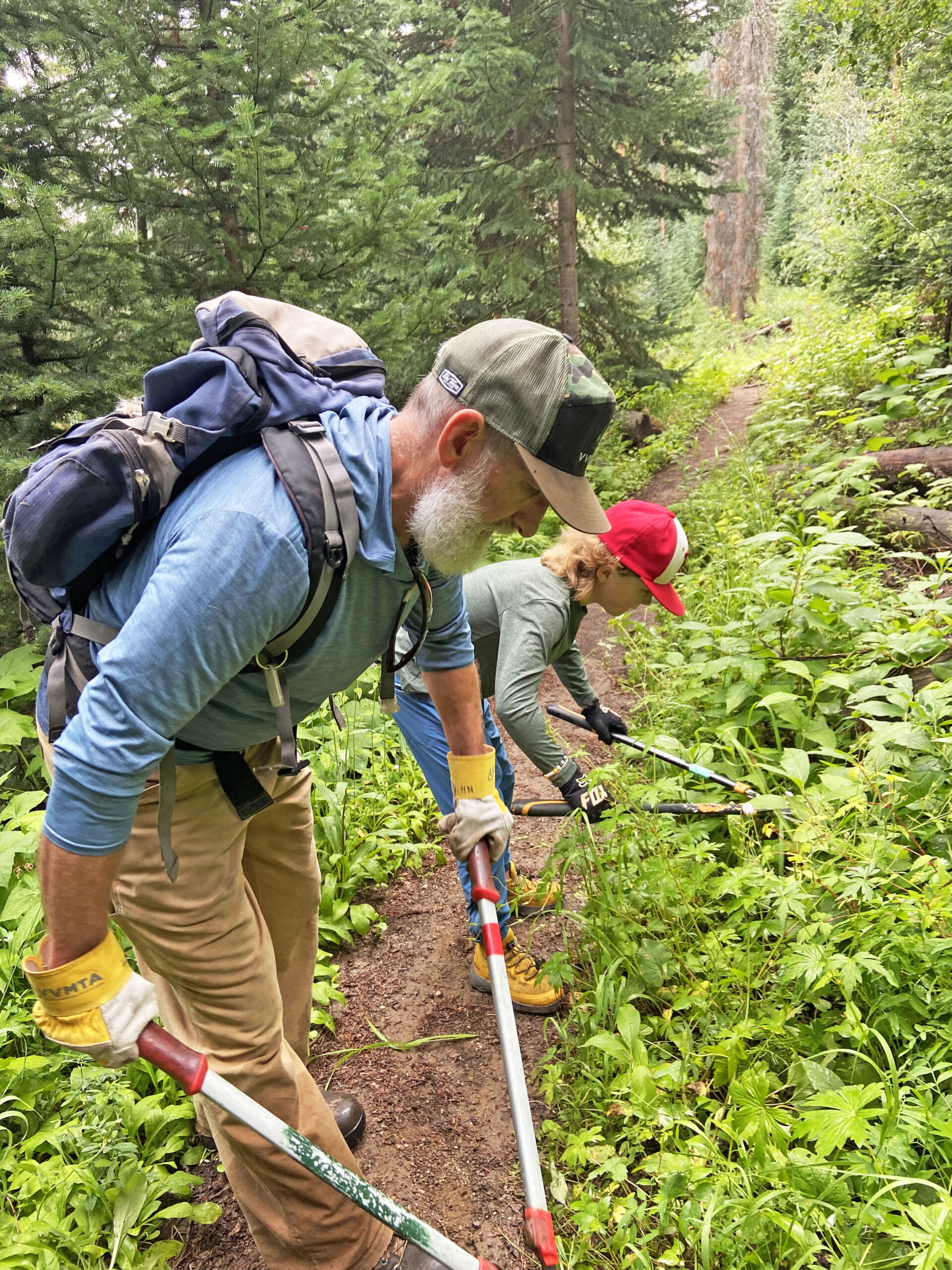
Every spring, before the season opens, VVMTA crews head out to clear between 300 and 600 downed trees from the trail network across Eagle County. It is one of the most consistent and labor-intensive tasks the organization undertakes each year. As that work continues, VVMTA has been exploring what it would take to layer a fire mitigation prescription on top of it, clearing not just the trail tread but a defined corridor on each side to create a meaningful fuel break.
Even five feet of cleared vegetation on each side of a trail would make a measurable difference in fire behavior and firefighter access. To complete that work across a four-mile trail like North Trail would require a crew of roughly 30 people working for two to three months. That is beyond what VVMTA can currently staff or fund for the 2026 season, but the question is now firmly on the table. As the volunteer side of this work develops, programs like Adopt a Trail could eventually support lighter vegetation work along existing corridors, turning a trail maintenance program into a fire mitigation one, one section at a time.
Building Fire Hardened Trails Into Active Projects
Two ongoing VVMTA projects are already incorporating fire hardened trail design. The Eagle Veil Trail extension, running from Eagle Valley Metro District land through a Town of Avon easement to the Beaver Creek entrance roundabout, will include fuel reduction throughout the remainder of the build. Specialized Land Management has already cleared vegetation along the completed portion, and those slash piles are visible on the hillside above Eagle off Interstate 70. As VVMTA finishes the extension, fire mitigation becomes part of the standard process, a precedent the organization plans to carry into every future project.
A planned reroute of the Water Tank Trail in Homestead is being designed around a specific fire mitigation strategy. Eagle Valley Wildland has already treated vegetation on both sides of the planned alignment. The reroute’s switchbacks will connect those treated sections and create what fire crews call a catcher mitt: a continuous break in the fuels that protects the communities of Homestead, Arrowhead, and Edwards. Both projects are working through land manager and stakeholder approval processes, and VVMTA is committed to seeing them through.
Cutting Through the Red Tape on Federal Land
Getting fuels reduction work approved on Bureau of Land Management (BLM) or U.S. Forest Service (USFS) land has historically been a challenge. The National Environmental Policy Act (NEPA) review process is lengthy, and for an organization like Eagle Valley Wildland, moving a standalone fuels reduction project through that process can take years. VVMTA’s solution is to write the fire hardened trail prescription directly into a new trail proposal from the start, so that when the trail is approved, the fuels reduction authorization comes with it.
A new trail proposal near Eagle is currently with the BLM and is expected to go out for public scoping soon. Once approved, those trails will serve as firebreaks for neighborhoods throughout the community of Eagle. It is a collaborative approach that gives both VVMTA and Eagle Valley Wildland a faster, cleaner path to work that actually protects people.
Already on the Ground: The Trails and Stewardship Crew
While the larger fire hardened trails vision continues to take shape, VVMTA’s Trails and Stewardship Crew is already doing fire prevention work across Eagle County this season. The crew is expanding its patrol scope in 2026 to include fire-specific education and infrastructure, adding a new dimension to what this team does on public lands every day:
- Posting fire restriction signage on trails as restrictions go into effect each season
- Patrolling backcountry camping areas for unattended or improperly managed fires
- Dispersing illegal rock rings and installing proper fire rings in areas where dispersed camping is common
- Educating campers on fire restrictions, wildfire risk, and best practices for fire management in the backcountry
- Actively monitoring for smoldering or abandoned fires and extinguishing them when found
Support the Work That Protects This Valley
Fire hardened trails require more than a good idea. They require crews, approvals, community investment, and years of sustained effort to build into standard practice across Eagle County’s trail network. VVMTA is doing that work now, with limited resources and a clear sense of what is at stake. If you want to help expand the Trails and Stewardship Crew’s capacity and move this vision forward, please consider making a donation at vvmta.org/donate. Every contribution goes directly toward the programs and the people protecting this valley’s trails and the communities that surround them.
Frequently Asked Questions
What does it mean to design a trail as a fuel break?
Fire hardened trails are trails designed and managed to function as fuel breaks in a wildfire landscape. By removing trees under five inches in diameter, limbing larger trees up to eight feet, and clearing deadfall within the trail corridor, the cleared zone slows a fire’s advance and creates a path that wildland firefighters can use to access and work the fire. The trail does not stop a fire on its own, but it changes how a fire behaves near it and what options crews have when responding. VVMTA is working to incorporate this approach into both existing trails and new projects across Eagle County.
Is VVMTA a fire agency?
No. VVMTA is a trail nonprofit whose mission is to build, maintain, and steward singletrack trails in Eagle County for hikers, runners, horseback riders, cyclists, and all outdoor recreation users. This work reflects VVMTA’s role as a collaborative partner alongside Eagle Valley Wildland, the Bureau of Land Management, and the U.S. Forest Service. VVMTA’s contribution is trail expertise, land access relationships, and crews already working on the ground. The fire mitigation expertise comes from the agency partners VVMTA works alongside. Learn more about VVMTA’s Trails and Stewardship Crew and the work they do across all public lands in Eagle County.
Which Eagle County communities benefit from this wildfire mitigation work?
The active projects VVMTA is working on are focused on areas near EagleVail, Eagle, Homestead, Arrowhead, and Edwards. The Water Tank Trail reroute in Homestead, for example, is designed specifically to create a fuel break protecting those communities by connecting areas where Eagle Valley Wildland has already completed fuels reduction work. The BLM trail proposal near Eagle would serve neighborhoods throughout that community. As this design approach becomes standard practice in VVMTA’s project work, the benefit will extend across the broader Eagle County trail network. For current trail information and conditions, visit vvmta.org/trailconditions.
How can I support VVMTA’s wildfire mitigation and trail stewardship work?
The most direct way to support this work is through a donation at vvmta.org/donate. VVMTA’s Trails and Stewardship Crew requires $250,000 in annual funding to operate, and expanding that crew’s capacity is essential to moving this vision forward at scale. You can also volunteer through the Adopt a Trail program, which may increasingly include light vegetation work in trail corridors as the program evolves. Finally, following fire restrictions, educating fellow trail users, and reporting any unattended fires you encounter while recreating on public lands are all meaningful contributions to keeping Eagle County’s trails and communities safe.