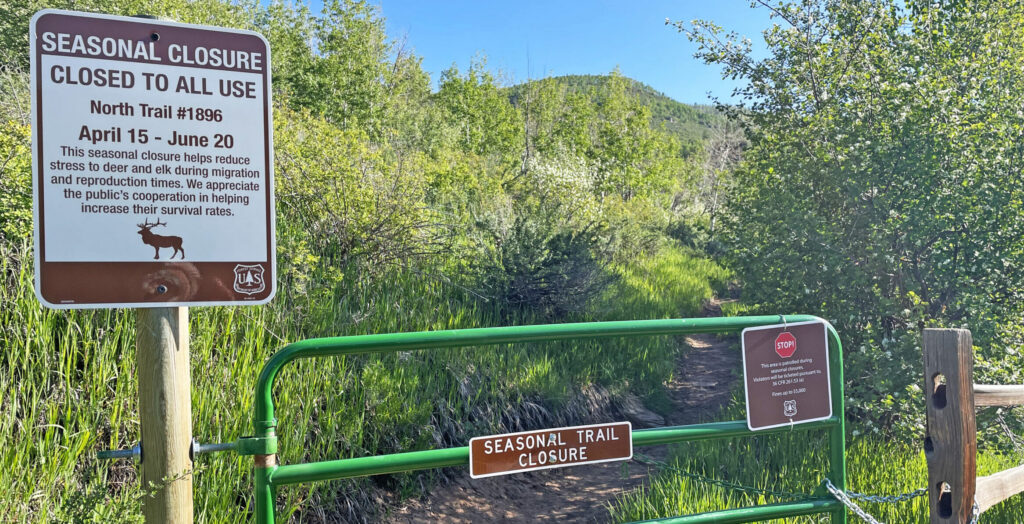
By Ernest Saeger
This spring has come on fast. The valley is drying out early, and every trail in Eagle County looks like it should be open. So when you pull up to a trailhead and find a gate, the timing feels especially rough.
You drove out here with a perfectly good plan, and the trail looks completely dry. The internal negotiation kicks in almost immediately: surely this closure does not apply today, maybe it is just for bikes, maybe a quick loop will not hurt anything.
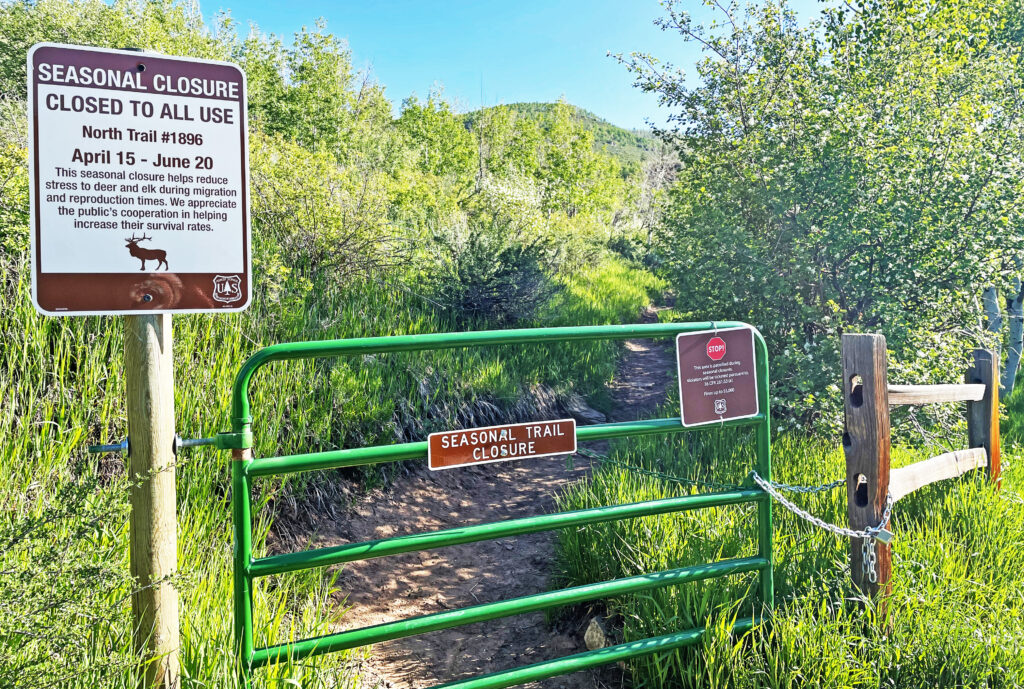
It does apply, and the reason has nothing to do with mud. For years, many of us at VVMTA thought the same thing. Then the USFS and Colorado Parks and Wildlife walked us through what actually happens during these closures, and our whole approach changed.
What Is Actually Happening Out There
Every spring and winter, seasonal wildlife trail closures go into effect across Eagle County on U.S. Forest Service land, Bureau of Land Management (BLM) land, Town of Eagle Open Space, Eagle County Open Space, Town of Minturn, and the West Avon Preserve. Each land manager makes the final call on closures within their jurisdiction, with Colorado Parks and Wildlife (CPW) providing wildlife expertise and recommendations. The Vail Valley Mountain Trails Alliance (VVMTA) supports the effort on the ground. The animals driving these closures are our local elk and mule deer herds, and their situation during this time of year is more fragile than most trail users realize.
In winter, elk and deer survive on near-starvation rations. They spend summer and fall packing on fat reserves, then burn through those stores slowly as food becomes scarce. When a hiker, a biker, or a dog triggers a flight response, the animal burns energy it cannot afford to lose. In severe cases, that lost energy is the difference between surviving winter and dying before spring arrives.
Spring brings a different but equally urgent challenge. As snow melts, deer and elk begin following the receding snowline toward higher elevation summer ranges. Researchers describe this migration as “surfing the green wave,” meaning the animals track the emergence of fresh vegetation at each elevation as it becomes available. They are also creatures of deep habit. Because elk and deer return to the same calving and fawning areas year after year, the seasonal wildlife trail closures are mapped precisely where these animals need to be.
Why the Stakes Are Higher Than You Think
The spring closure period is especially sensitive because it overlaps with calving and fawning season. Pregnant females seek out secluded areas to give birth and nurse their young. When a hiker, a runner, or a dog spooks a new mother, she may flee and leave her calf behind. A calf separated from its mother in the first hours of life has almost no chance on its own. It cannot find food, it cannot regulate its body temperature, and predators will find it quickly. According to Colorado Parks and Wildlife, recreational activity is a documented driver of altered elk behavior and reduced calf survival rates across the state. It is one of many pressures these herds face, alongside predation, habitat loss from development, roads, vehicle collisions, and the effects of a changing climate.
A 2026 study from Western Colorado University found that elk actively avoid areas within roughly the length of seven football fields from recreational trails during active use periods. For a herd already stressed from a long winter and trying to calve in peace, losing that much usable habitat to a single trail is significant. And the animals cannot just find somewhere else to go. They return to the same areas year after year by instinct. When we push them out, we are not just inconveniencing them. We are removing them from the only place they know how to be.
When We Found Out, We Got to Work
Before 2017, most trailhead signage about seasonal wildlife closures in Eagle County was missing, faded, or ignored. There were no gates at closed trailheads, no organized education program, and no community outreach explaining why the closures existed. VVMTA was going through the approval process for the Everkrisp Trail between Minturn and EagleVail when CPW’s input during that review opened our eyes. We learned that the closures were not about muddy trails. They were about wildlife. So we decided to do something about it.
In 2018, in partnership with the Forest Service, the VVMTA launched the Trail Ambassador program. What began as a volunteer-led effort has grown into a structured, data-driven presence at seasonally closed trailheads across the valley. Here is what that program looks like today:
- Paid seasonal trail ambassadors stationed at closed trailheads from early May through late June, working more than 40 hours per week
- 11 game cameras deployed at seasonal wildlife trail closures to track violation patterns
- Gates, buck and rail fencing, and updated signage installed at every trailhead that has a seasonal closure in partnership with the U.S. Forest Service, and local land managers
- Direct education conversations with trail users who arrive at closed gates
- A Respect the Vail Valley campaign that promotes responsible recreation across the valley, from wildlife awareness to trail etiquette and community stewardship
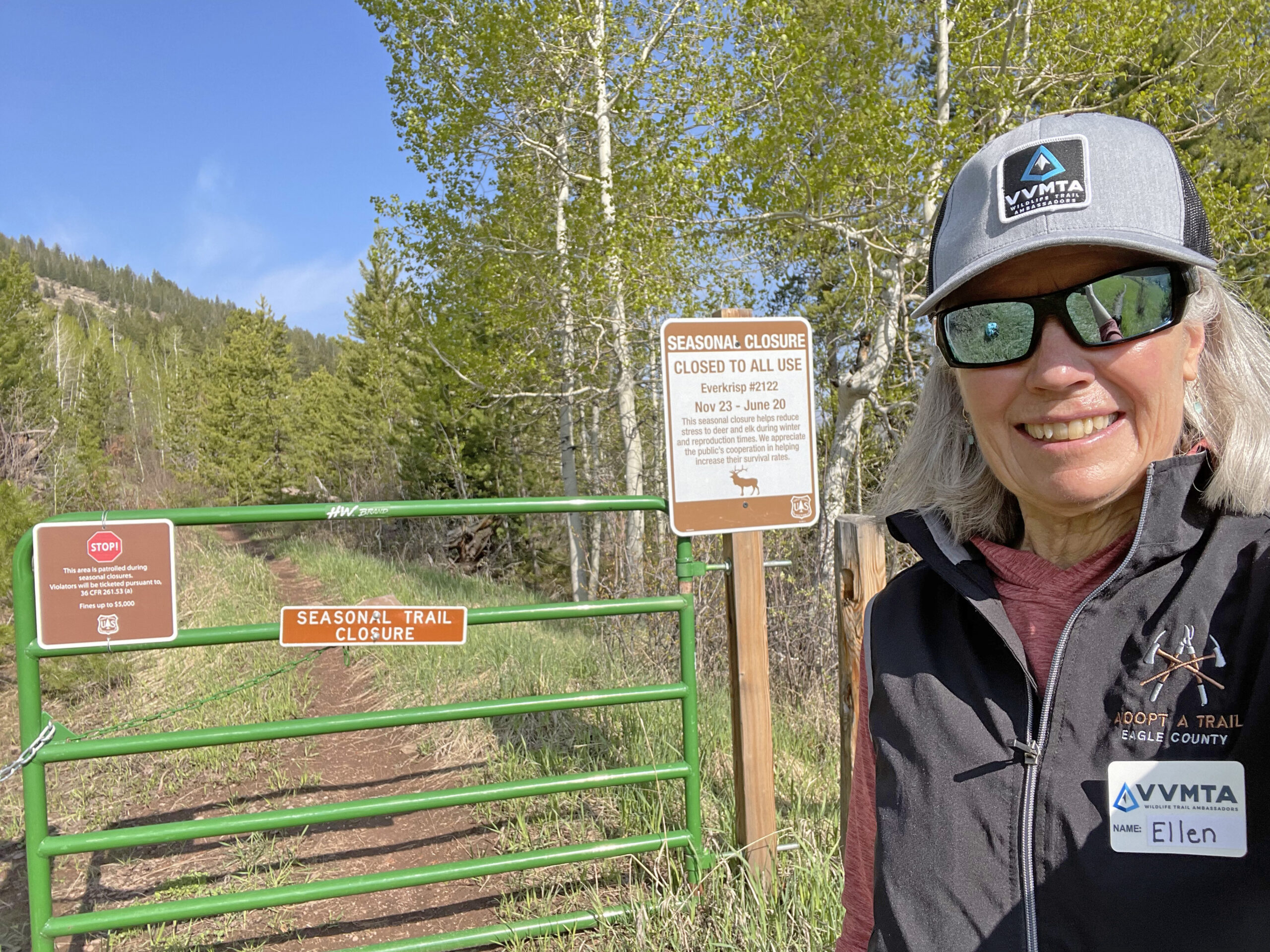
The results speak clearly. Before the program existed, violations at closed trails numbered in the hundreds each year. Today, game camera data shows violations at most trailheads have dropped to single digits or low double digits. Last year, trail ambassadors made more than 500 direct contacts with visitors at seasonally closed gates. That is 500 conversations that may have kept people from crossing into critical calving habitat.
| Before Trail Ambassador Program (2017) | Today |
|---|---|
| Violations in the hundreds annually | Single digits to ~30 at most trailheads |
| No signage or missing/damaged signs | Gates and updated signs at 11 trailheads |
| No violation monitoring | 11 game cameras actively monitoring closed trails for violation trends |
| No formal education at trailheads | 5,434 direct trailhead contacts since 2018 |
The Gap Between What Is Needed and What Is Funded
Despite that progress, there is a significant gap between what this work requires and what VVMTA can currently fund. The organization protects 11 trailheads across Eagle County during the spring closure season between April 15 and July 1. Right now, there is one paid seasonal trail ambassador and a limited number of volunteers to cover all of them along with very limited time from local land manager staff.
That ambassador works 40 hours a week during the closure window Thursday through Sunday, which is a remarkable commitment. However, one person cannot be everywhere at once. As outdoor recreation in the Vail Valley continues to grow and warm springs arrive earlier each year, the pressure on these closures intensifies. Spring is one of the most critical and vulnerable periods in the annual wildlife cycle, affecting plants, soil, and animals all at the same time. The wildlife does not get a budget. The calves do not get a later start.
How You Can Help Right Now
Respecting seasonal wildlife trail closures is one of the most direct ways that trail users can support the wildlife we share this valley with. A few simple steps make a real difference:
- Check the current closure map before you head out at vvmta.org/seasonaltrailclosures. It is one of the most visited pages on our website for a reason
- If you reach a closed gate, turn around. Even if you do not see any animals, they may see, hear, or smell you
- Keep dogs on a leash
- Share what you know with fellow trail users who may not understand why the gates are there
We Love These Trails Because of What Lives Here
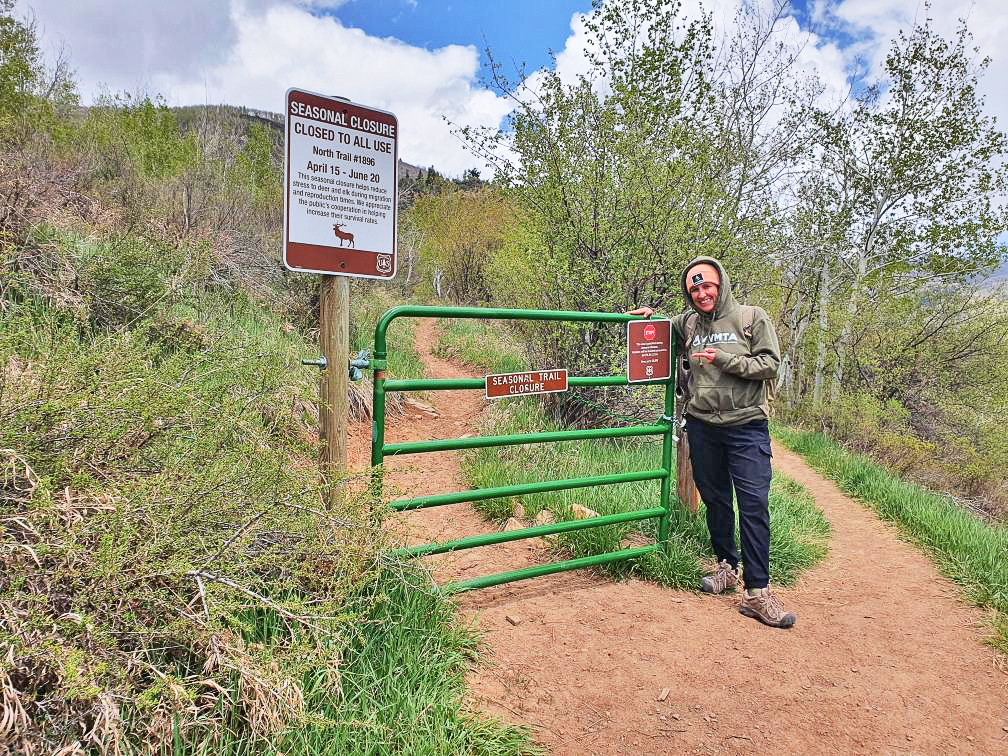
The trail system in Eagle County is extraordinary. So is the landscape it moves through. Hikers, runners, horseback riders, and cyclists share these paths with elk, mule deer, bears, bald eagles, and bighorn sheep. That coexistence is not automatic. It requires active stewardship from the agencies and organizations managing public land, and it requires the cooperation of every person who steps through a trailhead gate.
VVMTA believes that people who love the outdoors are the best advocates for protecting them. The seasonal wildlife trail closures are not an obstacle to enjoying the Vail Valley. They are evidence that this community takes seriously its responsibility to the land and the wildlife that make it worth protecting. Recreation and conservation are not opposites, and in Eagle County, we have the programs and the data to prove it.
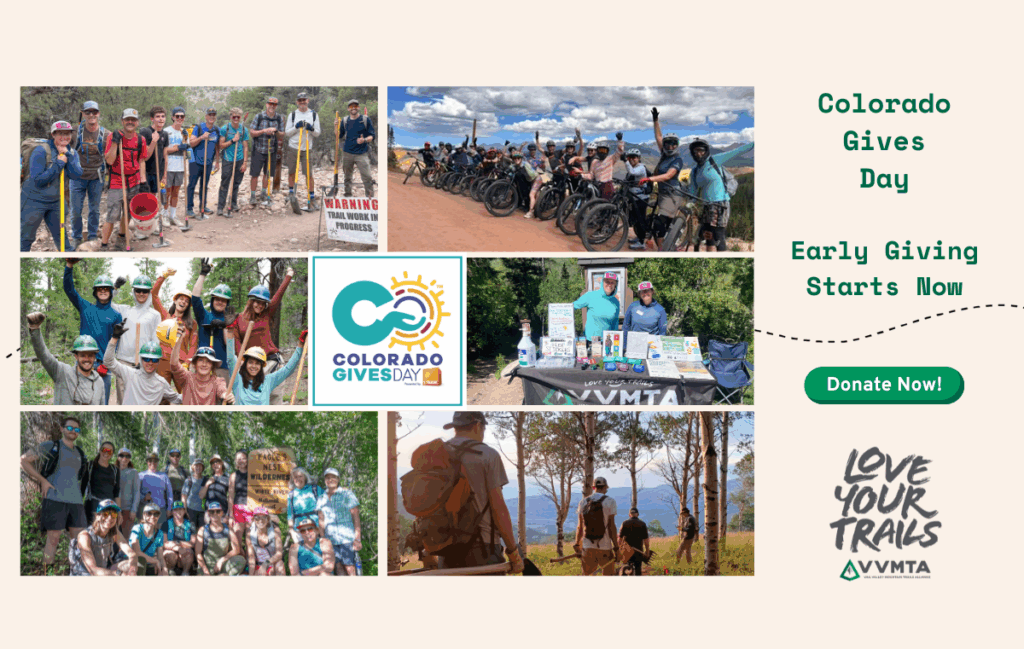
If you want to help fund the Trail Ambassador program and expand VVMTA’s conservation work across Eagle County, please consider making a donation at vvmta.org/donate. Every contribution goes directly toward trails we all love.
Frequently Asked Questions
When do seasonal wildlife trail closures start and end in Eagle County?
It depends on the location. Winter closures in the Eagle area typically run from December 1 through April 15, protecting lower-elevation winter range. Spring closures begin as the animals migrate to higher elevations. Many go into effect on April 15 and run through June 20 in areas around Vail, with Arrowhead and Beaver Creek staying closed through July 1 for elk calving. For the full current list, visit vvmta.org/seasonaltrailclosures.
Why are trails still closed when they look dry and open?
Seasonal wildlife trail closures are not about trail conditions. They are about the elk and mule deer using that land to calve and fawn. Even if a trail looks completely dry and rideable, the closure is in place because pregnant females and newborn calves are relying on that habitat right now. Human presence alone, even without direct contact, can trigger a flight response that separates a mother from her calf. A newborn calf left alone in the first hours of life cannot feed itself, cannot regulate its body temperature, and is immediately vulnerable to predators. The trail surface has nothing to do with it.
Do closures apply to hikers and trail runners, or just mountain bikers?
Most spring wildlife closures apply to all users, including hikers, runners, horseback riders, and cyclists alike. Some areas have use-specific restrictions, so it is always worth checking the current closure map before you go. VVMTA updates trail and closure information regularly at vvmta.org/trailconditions.
Where can I find the most current trail closure information?
The best source for Eagle County closures is vvmta.org/seasonaltrailclosures, which VVMTA keeps updated throughout the spring and winter seasons. For federal land closures across Colorado, the BLM Colorado closures page is also a reliable resource. When in doubt, check before you go.