This past year felt different. In Eagle County and across our trails and public lands, it often felt like every time we turned around there was something new to respond to. A plan to reorganize the Forest Service. Staffing cuts and shrinking budgets. A new transmission line proposal. Changes to camping in Homestake. A push to rescind the public lands rule. An attack on railbanking that could derail the Tennessee Pass rail to trail vision.
Some days we were out on the trail building drains and clearing deadfall. Other days we were in front of town councils and county commissioners talking about trail crews, wildlife, and neighborhood impacts. Many nights we were at the keyboard, writing long comment letters so that recreation and conservation were not left out of the conversation. Here is a look back at what we have been fighting for and why it matters.
Everything we love about our national forest runs through a single agency, the United States Forest Service. When the Forest Service has people and funding, trails get maintained, wildfires are managed, toilets get cleaned, and campgrounds do not turn into free for all zones. When that support erodes, the whole system starts to fray.
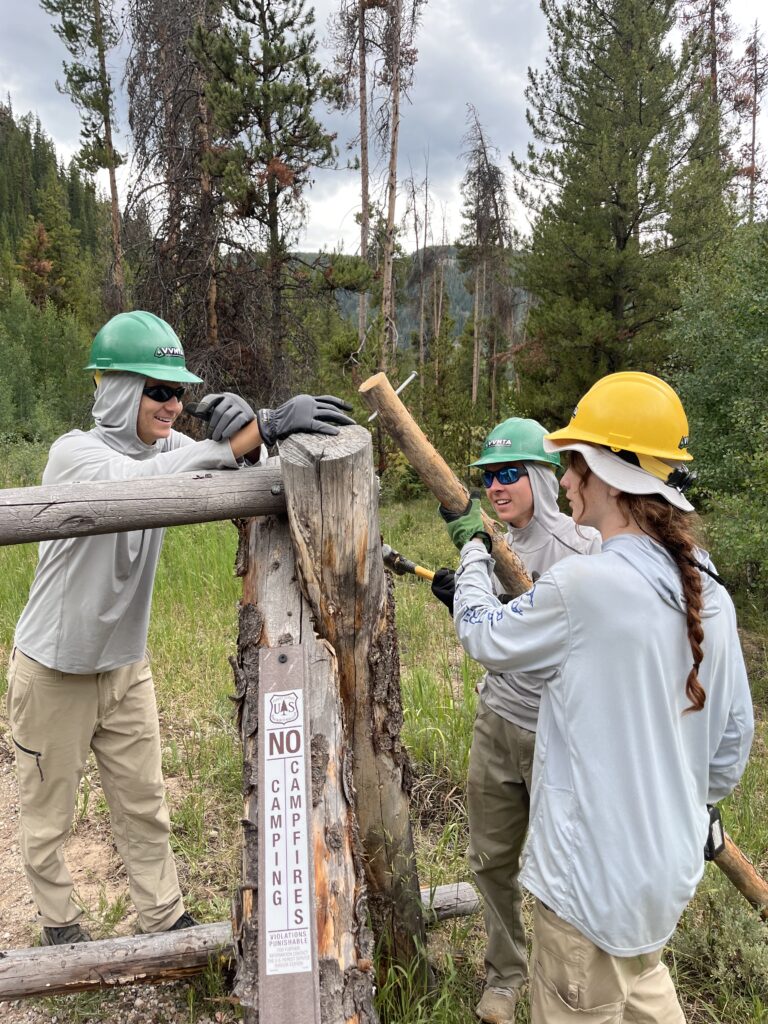
From the beginning, VVMTA’s prerogative has been to support the Forest Service with volunteers, not to replace it. Our goal has always been to stand alongside our public land managers, bring people power, and help them tackle the work they want to get done. Over the years though, the gaps have kept getting bigger. Project backlogs have grown, positions have gone unfilled, and more of the day to day work of caring for trails and public lands has landed on our shoulders. We have gone from being extra hands to being a core part of how this landscape is actually managed.
This year we weighed in on a United States Department of Agriculture plan that would reorganize the Forest Service and eliminate regional offices, pushing decisions farther away from the communities that live with the results. In our comments we said plainly that this is risky for places like Eagle County. Regional offices hold expertise that keeps projects moving. Vacancies and hiring challenges already slow down basic work like trail maintenance and planning. If the agency cuts more staff or hollows out regional support, it becomes much harder to maintain recreation infrastructure and steward the land.
It is important to say that none of this is a knock on our local Eagle Holy Cross Ranger District. They are not the problem. They are at the mercy of decisions made in Washington DC. The staff here are just as passionate, probably even more, about trails, wildlife, and the health of our forests and community as anyone in this valley. They want to be out on the ground with us. They simply do not have the capacity they once did.
At the same time, the national budget picture for the Forest Service was getting worse. Hiring freezes, a shrinking seasonal workforce, and real cuts to staff started to show up in our own backyard. Here at home, more than 80% of Eagle County is public land, much of it in the White River National Forest, the busiest national forest in the country. Visitor numbers keep climbing while budgets fall behind.
Most people love these places and assume there will always be someone to clean restrooms, repair trails, manage camping, enforce wildlife closures, and prepare for wildfires. With fewer people in uniform, those basics become harder. That is why we called on our community to step up by volunteering, supporting local conservation and recreation organizations, speaking up for public land funding, and practicing simple, everyday stewardship every time they head outside. This is also why we had 26 paid boots on the ground this year, filling gaps and addressing impacts to our trails and public lands.
One of the most intense moments of the year was when we learned that a bill in the Senate could open up a huge portion of Eagle County’s public lands for potential sale.
Roughly 80% of Eagle County is public land, about 880,000 acres of Forest Service and Bureau of Land Management lands. The initial proposal put about 64% of that total more than 565,000 acres at risk by targeting public lands within a short distance of towns for possible disposal. That list included close to home places many of us visit every week Eagle’s trail systems, North Trail, Son of Middle Creek, Buffehr Creek, Two Elk, Cougar Ridge, Game Creek, Whiskey Creek, Paulie’s Plunge, Vail Mountain and Beaver Creek, and big chunks of the country south of Eagle like Red Table and Ironedge.
We moved quickly. We pulled together maps that showed exactly which areas could be affected, wrote up a plain language explanation of what was at stake, and asked our community to contact our Senators and representatives through an easy online tool. Hundreds of you did just that. You shared the alerts, talked to friends and neighbors, and made it clear that selling off the public lands that define Eagle County is not an option.
For now, that pressure has made a difference. The proposal has been revised so Forest Service lands are no longer on the chopping block, but there is still an effort to focus on selling Bureau of Land Management lands within a few miles of population centers. That still puts beloved close to town trail systems and wildlife habitat at risk around Eagle and Gypsum. We are staying on it and will keep asking you to speak up whenever these ideas come back.
Advocacy is not just letters and federal rules. A lot of our work happens in rooms right here in the valley. Week after week we engage in town council meetings and county commissioner sessions talking about trails, public lands, and recreation access. We are advocating for trail opportunities up and down the valley in Arrowhead, Beaver Creek, Eagle, Singletree, Vail, and Minturn. We show maps, answer questions, and connect the dots between healthy trail systems and healthy communities. Those local decisions about trailheads, easements, and neighborhood connections add up to the everyday experience you have when you walk out your front door. We are constantly reminding our local leaders that trails and public lands are part of basic community infrastructure, just like roads, water, and housing.

Another major issue this year was the proposal to rescind the Conservation and Landscape Health Rule, often called the public lands rule, before it even had a chance to work.
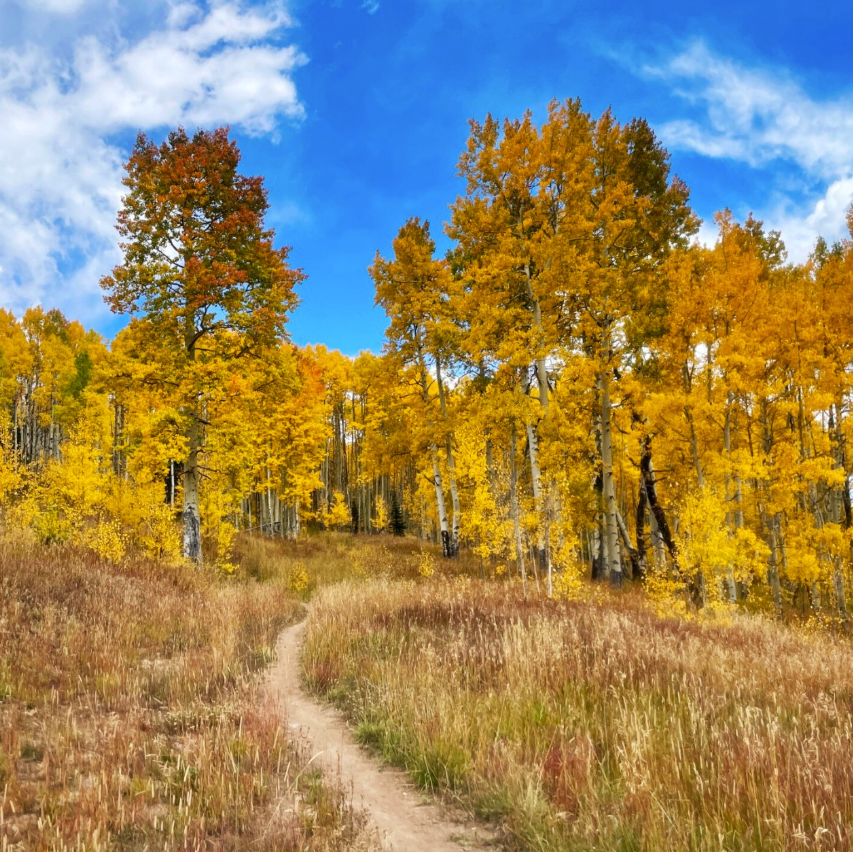
For towns like Eagle and Gypsum, that rule matters. The Bureau of Land Management lands that wrap around these communities, including the Hardscrabble Special Recreation Management Area and the Gypsum Hills, are where people ride, run, and hike before and after work. Kids learn to mountain bike there. Hunters, anglers, and trail users support local shops and restaurants. Wildlife habitat and watersheds are buffered right outside our back doors.
The rule came out of years of public input. Its goal is to give the Bureau of Land Management better tools to care for these landscapes while still supporting multiple uses. Throwing it away now would waste that work, create uncertainty for communities investing in trails and restoration, and make it harder to meet basic goals for healthy, resilient landscapes.
We urged the Bureau of Land Management to keep and improve the rule, to focus restoration on beaten up trailheads and routes, to prioritize travel and recreation planning around Eagle and Gypsum, to strengthen agreements with partners like VVMTA, and to avoid land disposals that would sever local trail networks or close off everyday access.
A surprisingly technical but hugely important ongoing issue this year is railbanking and a bill called House Resolution 4924, the Rails to Trails Landowner Rights Act. Railbanking is the tool that makes many rail to trail projects possible. Since 1983 it has allowed unused rail corridors to be preserved for potential future rail service while being used in the meantime as community trails. Thanks to railbanking, communities across the country enjoy continuous corridors, new local jobs and economic activity, and safe walking and biking routes away from traffic.
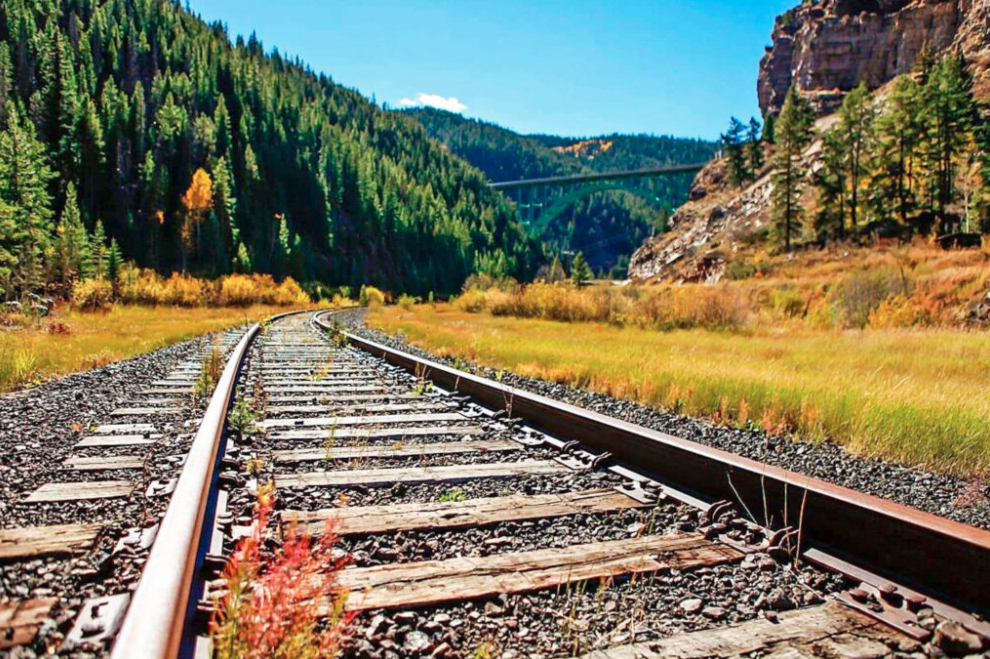
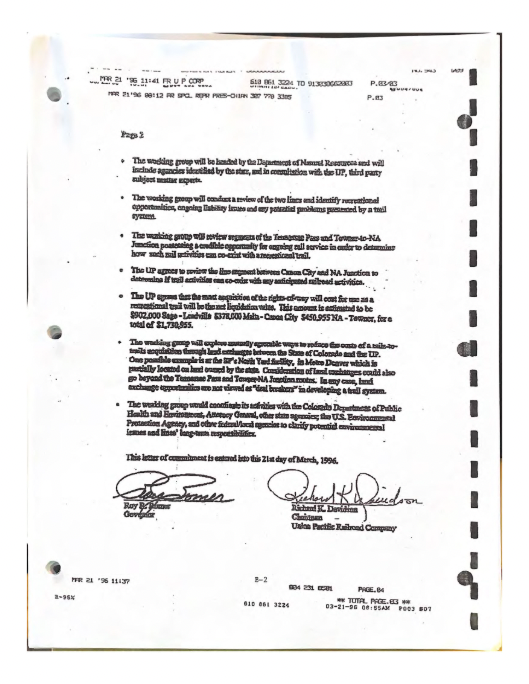
House Resolution 4924 would make railbanking so hard to use that it would barely function. It would shift financial risk to local trail sponsors, give any single adjacent landowner veto power, pile on new administrative hurdles, and force federal staff to reopen existing railbanked corridors. We wrote to Representative Joe Neguse to thank him for his public lands leadership and to ask him to oppose this bill. For us, this is not abstract. The Tennessee Pass Subdivision between Minturn and Leadville is a roughly 35 mile dormant rail corridor that follows the headwaters of the Eagle and Arkansas Rivers, passes through Camp Hale National Monument, and connects Minturn, Red Cliff, and Leadville. In 1996, state and local partners completed a feasibility study for a Tennessee Pass trail. Our Heart of the Rockies Trail initiative builds on that history.
Railbanking is the tool that could finally give this idea real legs. It keeps the corridor intact for any future rail need while turning it into a world class trail in the near term, connecting communities, supporting local businesses, and creating a signature experience that reflects who we are as a region.

We also advocated on the proposed Holy Cross Energy Avon Gilman 115 kilovolt transmission line project. On paper, it is about keeping the lights on. On the ground, some of the proposed routes run straight through the places where people ride, ski, and play every day, including Meadow Mountain, the Minturn Bike Park, and the Two Elk Trail.
In our comments, we said that from a recreation perspective the no action option is the only option that truly avoids serious impacts. If the project must move forward, the option that puts segments underground and reduces aboveground structures is the least harmful. We also pushed for a real recreation mitigation fund, full restoration of any damaged trails or bike park features, close coordination with local partners, and clear communication with the public.
Not every change this year was about stopping something. In Homestake Valley we supported a shift toward professional management of 48 designated dispersed campsites. Homestake has become the launch point for classic wilderness hikes to Missouri Lakes, Fancy Lake, Whitney Lake, and Cross Creek. It is beautiful and busy, and that has brought trash, human waste, vegetation damage, and fire risk. Better management can protect the valley while keeping it a high quality destination for campers and hikers.
Taken together, this has been a big year of advocacy. We showed up on a national reorganization plan, real staff and budget cuts, a major energy project, a key public lands rule, railbanking and the Tennessee Pass vision, camping changes in Homestake, and weekly local meetings about access and trails.
Behind all of it are some simple questions. Who takes care of our public lands. Who keeps our trails open and safe. Who decides what gets built, what gets protected, and what gets lost.
We believe the answer is all of us. At VVMTA we will keep doing our part, some days with shovels and some days with maps and meeting agendas. We are grateful for everyone who has already stepped up, and we invite you to stay engaged, stay informed, and stay loud for the trails, public lands, and recreation opportunities that make this place home.