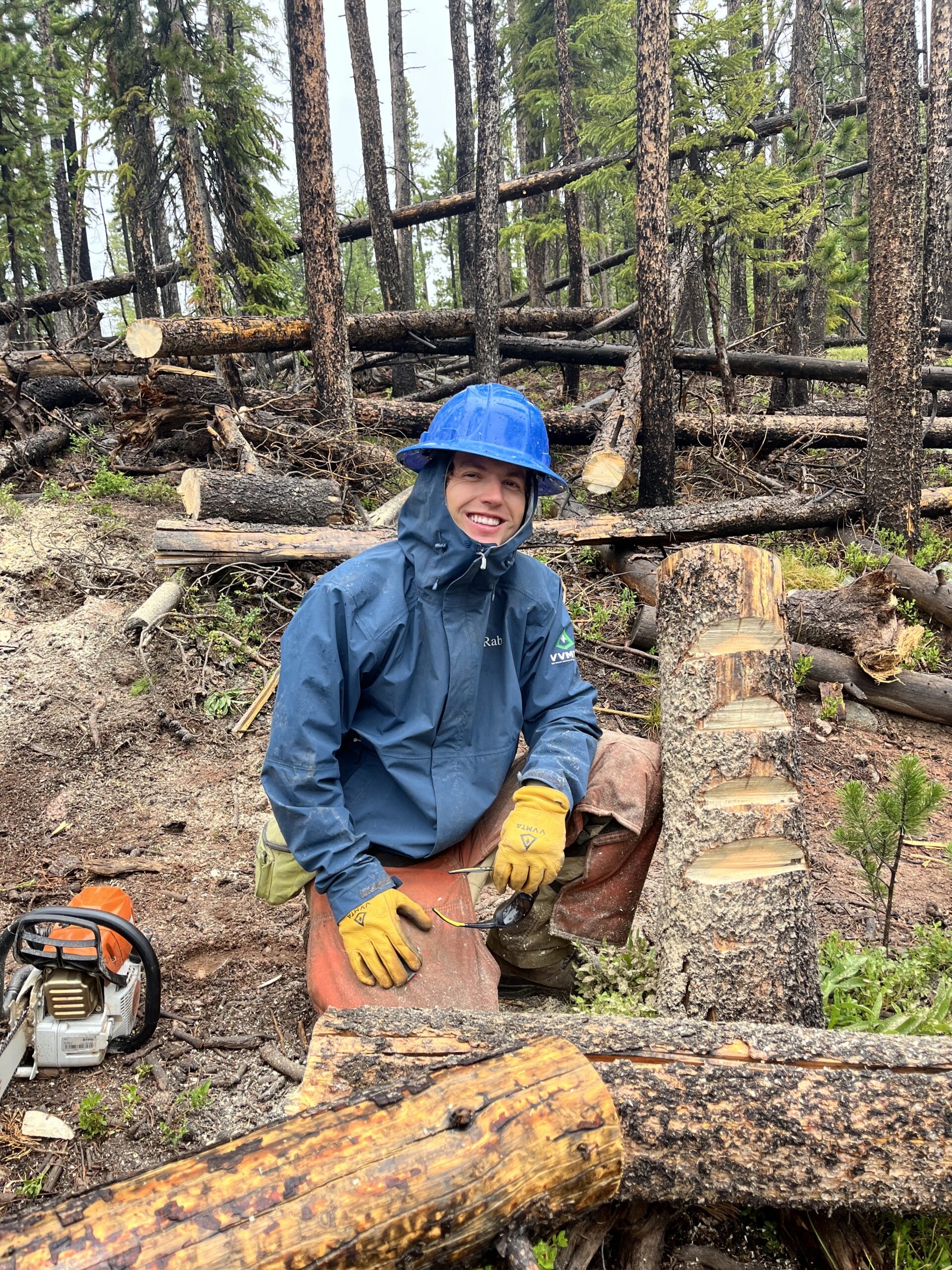
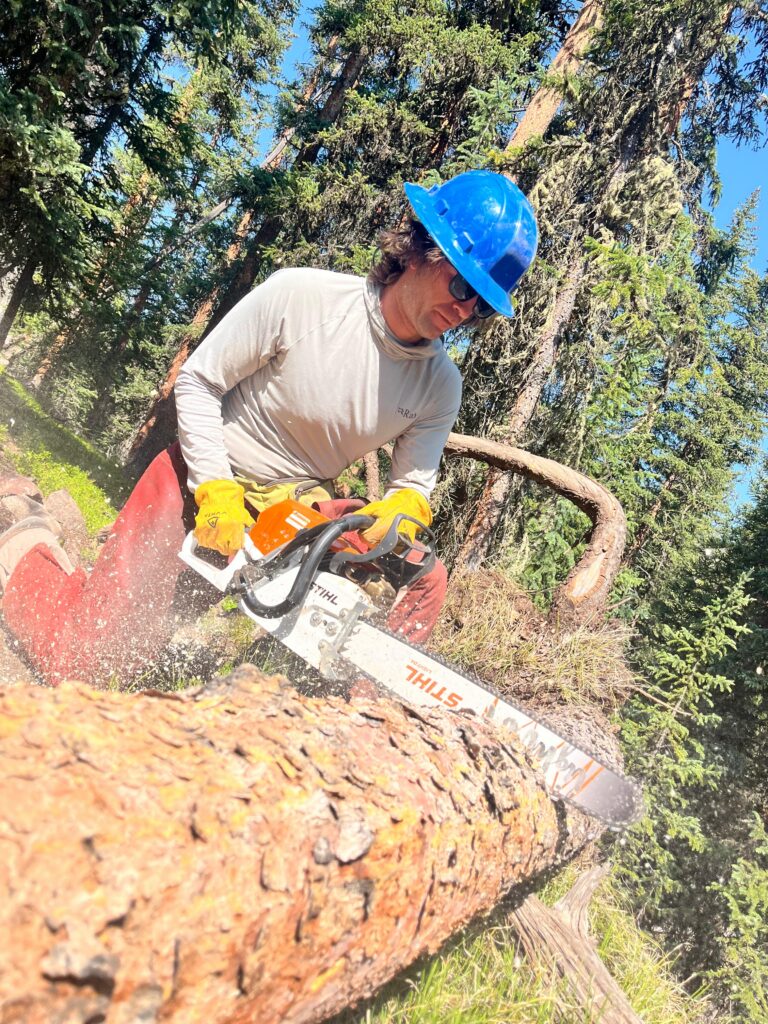
No day at work is the same for Sam Armstrong-Champ. One day, he may be cutting dozens of fallen trees to clear trails around Vail Mountain. “It could be walking a whole day with a chainsaw, maybe cutting five trees,” he says. “It could be cutting a hundred.”
The next, he might be hauling heavy tools to a project up on Grouse Mountain. The work demands physical endurance, technical skill and an eye for safety in rugged and unpredictable conditions.
While every day brings something new at Vail Valley Mountain Trails Alliance (VVMTA), all of Armstrong-Champ’s projects have the same goal: to keep trails open and accessible in the valley. Eagle County is the heart of local recreation for countless residents and visitors, and its trail system operates like a network of veins that keeps it thriving.
“It’s how a lot of people choose to socialize out here,” he says. “So creating that stage for them, being able to put time and effort into quality projects, that is just truly one of my biggest passions.”
After a long winter or severe weather conditions, those trails may be blocked by dead trees and debris, requiring hours of physical labor to clear them.
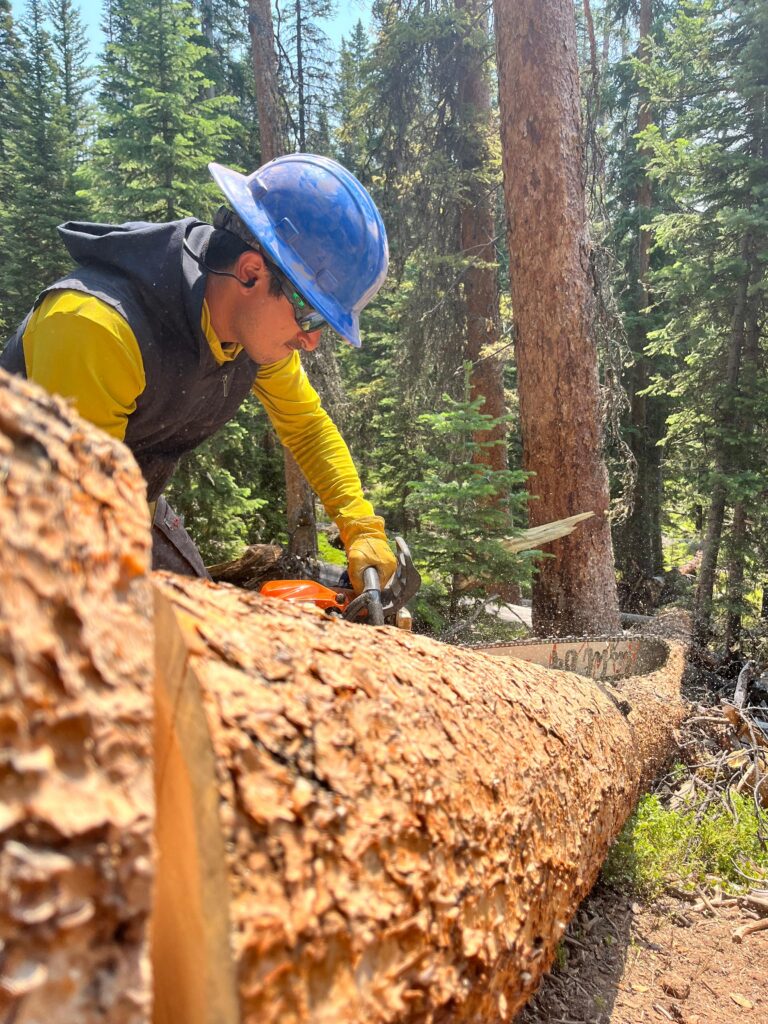
VVMTA has spent the past 10 years recruiting skilled workers to keep our trails healthy – for every boot or wheel that hits them. The nonprofit not only stewards nature, but nature-lovers, those who love trails and the relationships they create.
“I’m really passionate about the work we’re doing,” explains Armstrong-Champ. “And the impacts that it can have on the environment and the connection that trails bring to the community.”
Armstrong-Champ joined VVMTA five years ago as a summer crew member and has moved through the program to become a leader in the organization. According to him, training is crucial before any member works a trail.
VVMTA uses “Developing Thinking Sawyers,” a curriculum that promotes active decision-making and safety practices among all its members. It’s a mix of classroom instruction and thorough fieldwork, preparing crews for unpredictable field conditions.
The program allows crew members to wield chainsaws and other technical equipment along the trail, and it also prepares them for long and heavy work days. For many clearing projects, they’ll hike to worksites with everything on their backs. The treks can be anywhere from one to a few miles, and they may travel to areas as high as 11,000 feet.
“You’re carrying a saw, you’re carrying extra fuel, you’re carrying your axe, your wedges,” lists Armstrong-Champ. “Plus, at least three liters of water, your food, your gear and extra personals.”
With strong and well-prepared crews, VVMTA expects to clear most trails once the snow melts each year. They rely on the community to call in any major blockages, and that was the case with one of their most challenging jobs at Cougar Ridge.
Dozens of trees came down in the span of one night. To access the route, Armstrong-Champ’s crew shuttled to the top of Vail Mountain carrying mountain bikes. With chainsaws safely secured, they rode down the Grand Traverse and into the mess of fallen trees.
Trail projects like Cougar Ridge require careful coordination, and the VVMTA team uses creative solutions for different challenges.
“That was probably four miles before they hit any trees, so we can speed up our process sometimes by utilizing mountain bikes,” says Armstrong-Champ. “As trail workers, we can see what that user group is experiencing when they’re riding into these areas of maintenance.”

Different projects come with different needs, and VVMTA crews need the proper tools to adapt to any challenge they find on the trail. For Armstrong-Champ, tool maintenance is required for safe and successful trail maintenance.
Crews ensure equipment is cleaned and inspected after every project. Axes are polished and chainsaws sharpened, and safety kits are stocked with medical supplies and proper PPE. VVMTA works hard to keep their tools prepped for the trails, but with the valley’s extensive trail network, the constant wear and tear on equipment creates a consistent need for replacements.
“It makes the work a lot easier to have a sharp tool,” he says. “It’s safer to have sharp tools.”
VVMTA crews need quality equipment to ensure these trails can stay open and safe for public use. Each new axe, shovel and chainsaw can make all the difference. They need to keep positions competitive so they can hire strong, well-trained staff. Experienced members like Armstrong-Champ are passionate about the work and know how important outdoor access is in the valley.
It takes a lot of hands to build a trail, and not all of them are holding tools. Support VVMTA’s work throughout Eagle County and play a role in maintaining the trails you hike, bike and love in every passing season.

This guest article is one of five in a limited series partnership with Jaunt Media Collective, publishers of Covered Bridge, Well, and Spoke + Blossom magazines.